The Salvage Slab Audit: Judging a Reclaimed Worktop Before It Reaches Your Kitchen
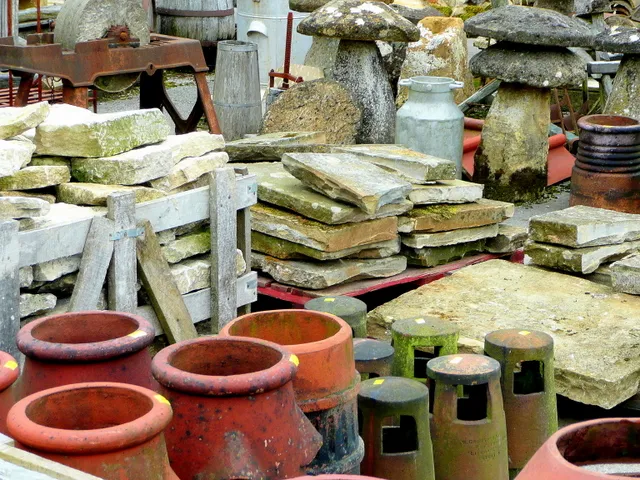
Reclaimed stone has an obvious appeal. A slab that has already served one kitchen or bathroom can cost a fraction of new material, and ex-display pieces occasionally offer desirable colours that are no longer stocked. Yet buying second-hand stone is not the same as buying a new worktop from a fabricator. The material has been handled, cut, fitted and removed, and those events leave evidence that must be read carefully. The salvage yard is not a showroom, and the buyer who treats it as one often inherits someone else's problems.
Begin With the Slab, Not the Story
Provenance is useful, but it is not a condition report. A seller may describe a piece as coming from a handsome period house or a high-end showroom, yet the slab itself is the only reliable witness. Ask why it was removed, how long it has been stored, whether it was previously fitted and whether any repairs were carried out. Listen for vague answers, but do not rely on them either way. Ex-display worktops may never have seen a hot pan, but they were often cut for a display kitchen with a particular sink and hob layout. Demolition slabs may be structurally sound, but they may also have been levered from cabinets with little care.
Inspect the piece in person and in daylight if possible. Bring a tape measure, a straight edge, a torch, a spirit level and a camera. If the yard permits it, ask for the slab to be laid flat on bearers rather than left leaning against a rack, since a leaning slab can conceal bowing and is also a safety risk.
Thickness, Tolerance and Flatness
Measure the thickness at several points along each edge and across the middle. Natural stone worktops are commonly supplied at 20mm, 30mm or 40mm, but reclaimed material may have been calibrated or re-polished, and thickness can vary from the nominal figure. Small variation is not necessarily fatal, particularly on a honed surface, but it affects edge details and joints. If the slab is thinner in places, the mason may need to build up the underside or adjust the edge profile to keep the front edge looking consistent.
Place a straight edge across the face and along the length. A slight bow may be acceptable on a short run but problematic across a wide island or a long perimeter. Check the underside as carefully as the top. Fixing marks, old adhesive, damp staining and previous cut-outs all affect how the slab can be supported and installed. A slab that has been stored flat on damp ground may have absorbed moisture, and some stones are more susceptible to staining from the back than buyers expect.
Cracks, Repairs and Previous Fixes
Cracks are the most common reason a cheap slab becomes expensive. Look in raking light with the surface dry, then again after lightly wetting it. Cracks often begin at stress points: sink cut-outs, hob openings, internal corners and narrow bridges of stone. Hairline cracks may be stable, but they may also open during transport or when the slab is re-templated. Resin repairs can be very well executed, so examine the surface for a slight change in sheen, a colour patch or a line that does not follow the natural veining.
Chips and bruises along the edges matter because the mason may need to remove several millimetres to create a clean profile. That can alter the dimensions and reduce the usable area. If the slab is engineered stone, check whether the surface has been re-polished and whether the pattern is consistent across the piece. Matching an engineered surface later is rarely straightforward, and a second-hand off-cut may be the only available match.
Stains, Acid Etch and Surface Wear
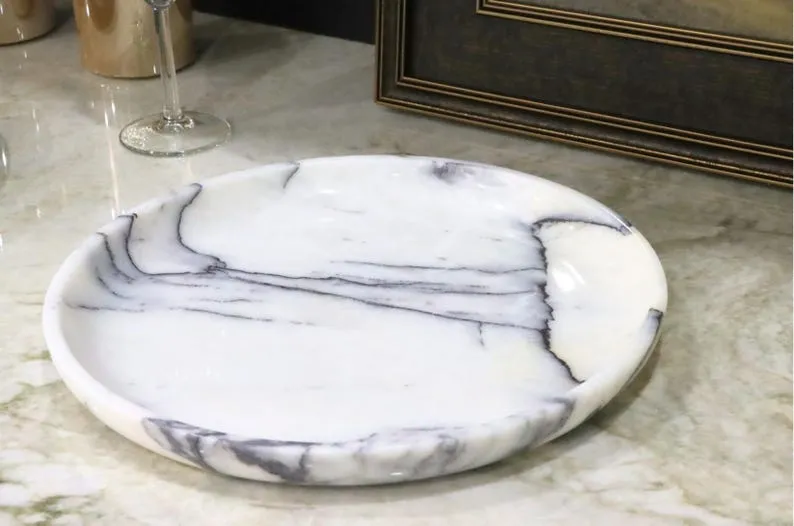
Marble, limestone and some other calcium-based stones are sensitive to acids. Lemon juice, vinegar, wine and many household cleaners can etch a polished surface, leaving dull marks that are difficult to disguise. Honed finishes hide etching better than polished ones, but they also hold stains more readily. Look for dark patches around the sink area, rings from plant pots or cups, and a general loss of clarity in the polish.
Re-polishing or re-honing an entire slab is possible, but it is skilled work and should be priced before purchase. A deeply stained or etched slab may still be a bargain if the finish is being changed anyway, but it is not a bargain if the buyer intended to keep the existing polish. Check the edges as well as the face; edge profiles that have been knocked or worn may need to be reworked along the whole length.
Cut-Outs, Off-Cuts and the Layout You Actually Get
A reclaimed worktop comes with a layout already imposed on it. The existing sink and hob cut-outs may not suit the new kitchen, and moving them is not simply a matter of cutting a new hole. Cut-outs weaken the slab, and the space between them must be sufficient for the stone to remain stable. A Belfast sink cut-out, for example, may leave a large opening that dictates where the sink must sit. A hob cut-out close to an edge may limit how much can be trimmed.
Ask what off-cuts are included. Upstands, splashbacks, window sills and shelf returns all require additional material, and a slab that looks generous on its own may leave nothing for the details. Check the direction of the veining and whether the piece can be book-matched with another slab if the layout requires it. If the worktop is for an island and a perimeter run, consider whether the two areas will look related or merely adjacent.
Transport and Installation Realities
Stone is heavy. A 30mm granite or marble slab weighs roughly 80kg per square metre, so a three-metre run at 600mm deep can exceed 140kg before packaging. Moving that safely requires an A-frame, suction cups and enough people. Many salvage yards will load a vehicle, but few will accept responsibility for a slab once it leaves. Check whether a tail-lift is needed, whether the vehicle can reach the property, and whether the slab will fit through doors, around corners and up stairs.
Access problems are not minor. A slab that cannot be manoeuvred into the kitchen is simply a large, expensive object in a driveway. Ask a stonemason to visit the property and the yard before purchase if the project is at all complex. Storage is another consideration: the slab must be kept flat and supported until installation, not propped against a wall where it can bow or fall.
What the Stonemason Will Charge, and When the Saving Disappears
Second-hand material does not reduce the cost of skilled labour. The mason must still template the kitchen, cut and shape the slab, profile and polish the edges, cut sink and hob openings, and fit the finished worktop. In some cases the work is more demanding than with new material, because the slab may need repair, re-polishing or careful adaptation to an existing layout. Charges are commonly quoted per linear metre or as a day rate, and a written quote should itemise templating, cutting, edge profiling, polishing, cut-outs, delivery and installation.
This is where the apparent bargain can quietly vanish. A slab bought for a few hundred pounds may require several hundred pounds of fabrication and fitting, plus transport and the risk of breakage. If the total approaches the cost of a new worktop of similar appearance, the reclaimed route offers little financial advantage and no manufacturer warranty. The saving is most convincing when the material is sound, the layout suits the existing cut-outs, the access is straightforward and the mason has confirmed the work in advance.
A Final Check Before You Commit
Ask for a written description of the slab, including dimensions, thickness, material type and any known repairs. Confirm collection arrangements and whether the seller will hold the piece while you obtain a mason's opinion. Photograph all defects. If a crack runs through a cut-out, if the thickness varies significantly, if there is insufficient material for upstands, or if the slab cannot be transported safely, walk away. Reclaimed stone can be a sound choice for the patient buyer, but only when the slab is judged as material rather than as a story.