The Hardest-Working Surface in the House: Specifying Stone for a UK Utility Room
Utility rooms are often specified last. A worktop left over from the kitchen is offered up, a sink is cut in, and the room is expected to absorb muddy boots, wet coats, pet bowls and the weekly laundry without complaint. That is a mistake in specification, not because natural stone cannot cope, but because the utility room asks different questions of a surface from the kitchen. The right stone, finish and support detail will last; the wrong one will show every oversight.
A different brief from the kitchen
Kitchens are judged visually as much as practically. Utility rooms are judged by how they behave on a wet Monday in February. The pressures are concentrated: detergent splashes, fabric conditioner, bleach-based cleaners, gritty mud, wet pet bowls, occasional accidents, and the constant vibration and low-level warmth of washing machines and tumble dryers. A stone that looks superb in a kitchen display may be the wrong choice beside a boot rack and a dog bed.
The sensible approach is to write a separate specification for the utility room. Decide what will actually happen on the surface, how often it will be cleaned, and whether a developing patina is acceptable. Natural stone can be highly practical, but it rewards an honest brief rather than a decorative afterthought.
Stone choice: durability before beauty
Marble is often the first material homeowners consider, and in a utility room it should be approached with caution. Marble is calcium-based and acid-sensitive. Pet urine, vinegar-based cleaners, some descalers and certain spills can etch the surface, leaving dull marks that are not simply dirt. In a busy utility room, marble will usually acquire a patina quickly. That may be acceptable in a period property where age and character are valued, but it is not the most forgiving choice beside a sink used for muddy boots.
Dense, hard stones such as granite, quartzite and slate are generally more suitable for a hard-working utility surface. They are less reactive to everyday chemicals and less likely to show etching, although no natural stone is stain-proof. Limestone and some sandstones are softer and more absorbent, so they need a higher level of care. A honed or brushed finish is usually more practical than a high polish: it hides dust, water marks and the fine scratches that grit can cause. Polished surfaces can look smart, but they show every smear and are less tolerant of abrasive mud.
Finishes, edges and joints
Finish matters as much as stone type. A honed surface has a low sheen that suits utility rooms well. Brushed or leathered finishes offer more texture and can disguise everyday marks. Avoid highly polished stone immediately around a utility sink unless you are prepared for visible water spotting and regular drying.
Edge detail should be simple. An eased edge or a small chamfer is easy to clean and less likely to chip than an ornate profile. Deep bullnose or moulded edges can collect grime and are difficult to keep tidy around pet bowls and wet hands. The cut-out for the sink should be sealed carefully, with the exposed edges treated in the same way as the surface. Silicone should be used at joints rather than grout, because movement and vibration are part of utility room life.
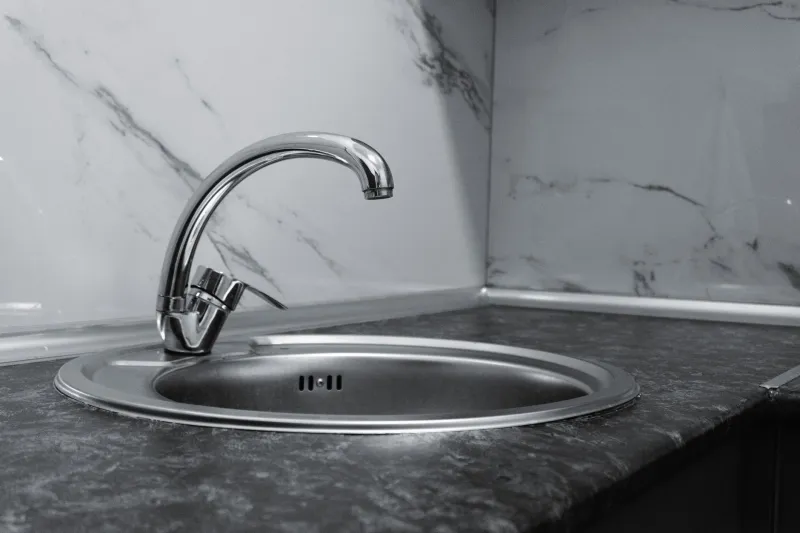
An upstand is useful behind a utility sink, particularly where splashes are frequent. A separate splashback can be practical if the wall is painted or papered. Drainage grooves are optional; they can help, but they do not replace drying the surface after use. The edge around the sink should not be left too thin, especially in a softer stone.
Sealing and stain management
Impregnating sealers reduce absorption, but they do not make natural stone stain-proof. The sealer must be suitable for the stone type, applied correctly and renewed according to the manufacturer's instructions and the intensity of use. A utility room may need more frequent attention than a lightly used kitchen worktop. Test any sealer on an offcut first, and keep a record of the product used so future maintenance is consistent.
Everyday management matters more than any single treatment. Blot spills rather than wiping them across the surface. Use pH-neutral cleaners on marble and limestone, and avoid acidic descalers, vinegar solutions and abrasive creams. Detergents, fabric conditioner and bleach can dull or mark some stones if left to sit. Pet accidents should be cleaned promptly, because urine is acidic and can leave both odour and etch marks. Muddy water carries grit, so a mat or tray beside the boot area will reduce abrasion. Leaking bottles should not be stored directly on stone.
Supporting appliances and managing heat
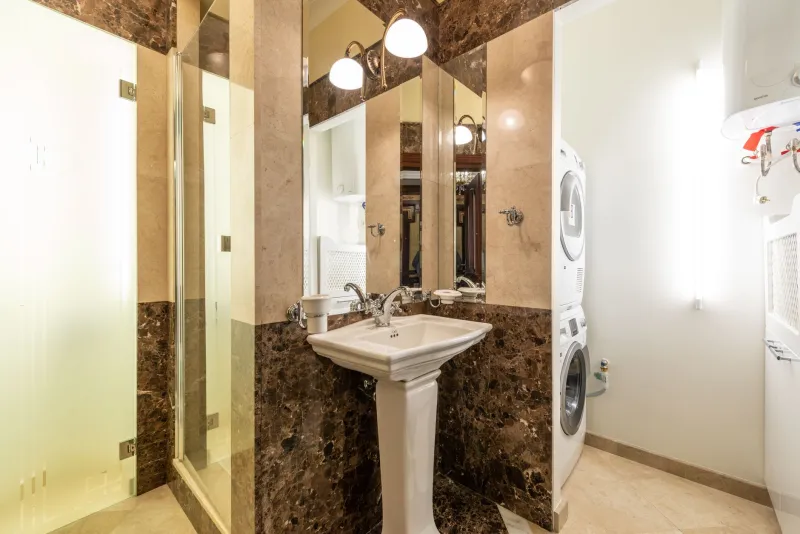
A stone worktop over a washing machine or tumble dryer needs proper support. Stone is heavy and brittle under point loading, and appliance vibration can open joints or crack an unsupported span. The worktop should sit on continuous support, such as timber rails or a sturdy appliance housing, rather than relying on the appliance itself or on end panels alone. Allow access for adjustable feet and servicing, and follow the appliance manufacturer's clearance requirements.
Ventilation and heat are equally important. Tumble dryers produce warmth and moisture, and a worktop should not be used as a shelf for hot items or as a sealed lid over a poorly ventilated appliance. Clearance around the appliance helps air move and reduces condensation. If the utility room is tight, consider whether the stone can be interrupted with a service gap or whether a different layout would be more sensible. Thermal shock is less common in a utility room than beside a range cooker, but hot pans, irons and portable heaters should still be kept off the stone.
When another surface is the wiser choice
There are utility rooms where natural stone is not the most sensible answer. If the room is used for pet washing, plant potting, muddy walking gear and regular bleaching, a more forgiving engineered surface may be the better specification. Quartz, porcelain, solid surface and even a good-quality laminate can offer predictable performance with less maintenance. Choosing one of these is not a failure of taste; it is a recognition that the utility room is a workspace first.
Natural stone remains a good choice where the room is well managed, the stone is suitable, and the owners accept that a working surface will develop character. Granite or quartzite in a honed finish, with simple edges and proper appliance support, can be both handsome and durable. The key is to avoid specifying marble by default simply because it suits the kitchen.
A practical specification checklist
- Identify the chemicals likely to be used, including bleach, descalers and pet cleaners.
- Choose a dense stone for heavy use, and prefer honed or brushed finishes over high polish.
- Specify a simple eased or chamfered edge that is easy to clean.
- Confirm sealer type, application and renewal interval before installation.
- Detail continuous support around washing machines and dryers, with service access.
- Allow ventilation and clearance for appliances that produce heat or moisture.
- Use silicone at joints and seal sink cut-outs carefully.
- Keep a maintenance kit with a pH-neutral cleaner and suitable sealer.
A utility room worktop does not need to be precious, but it does need to be specified with the same care as a kitchen worktop. The surface will be judged by how it copes with boots, bowls, bottles and appliances, not by how it looks on the day it is fitted. Get the stone, finish and support right, and the room will quietly do its work for years.